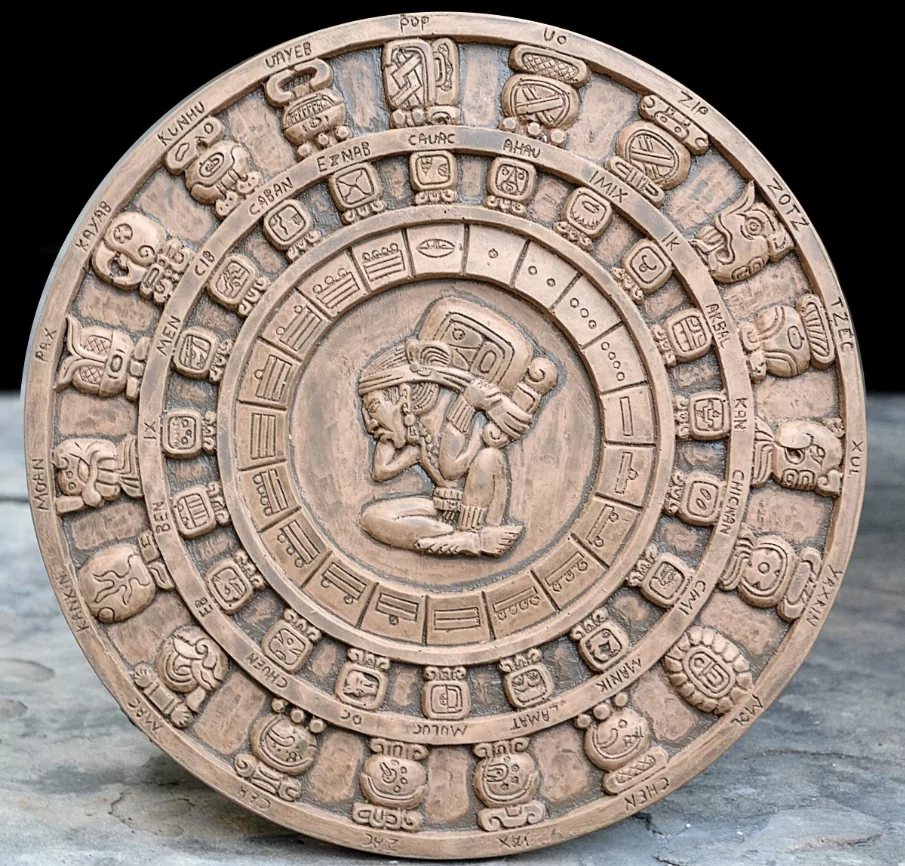
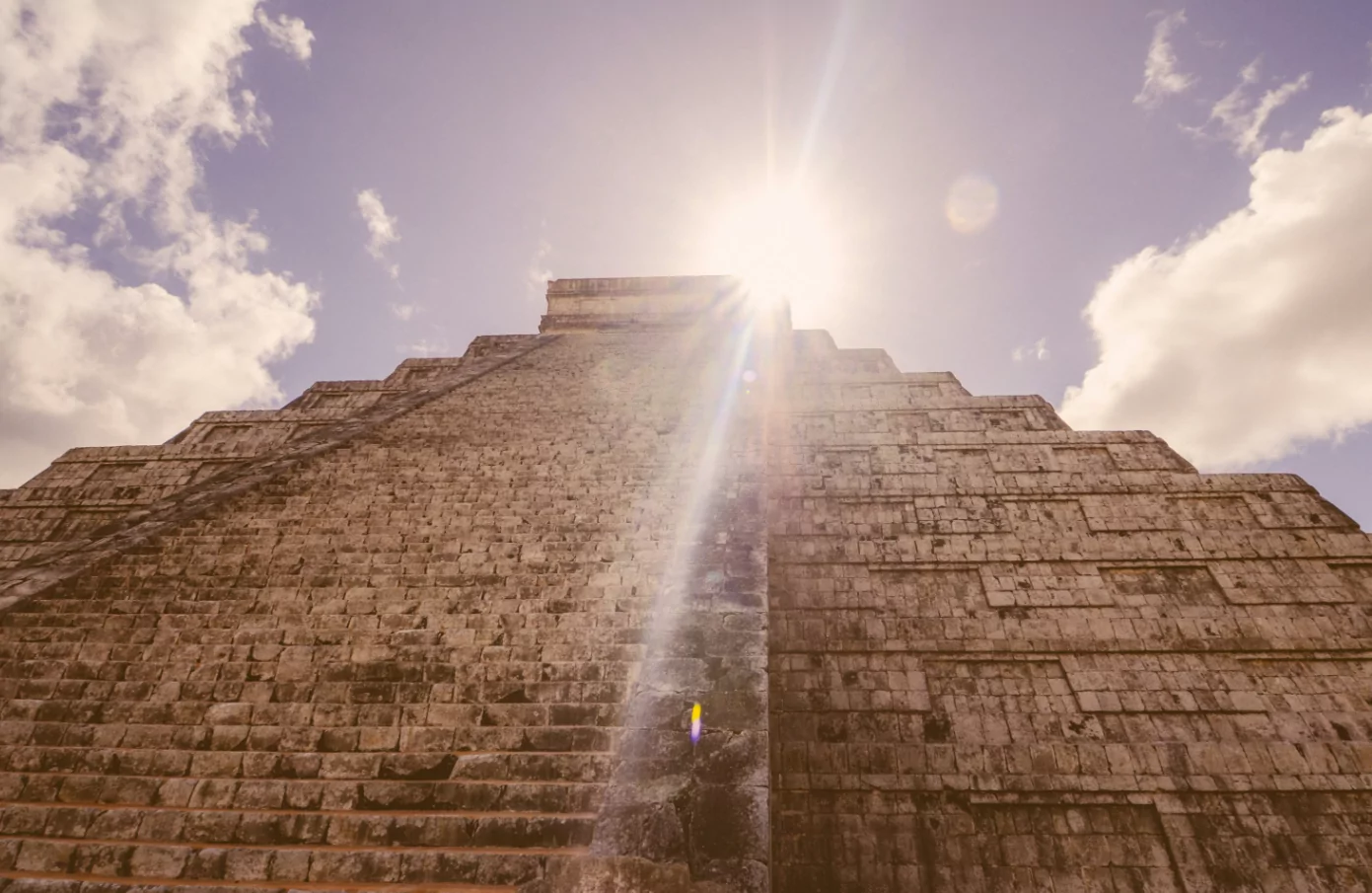
The Mayan calendar is more than an ancient way of keeping track of days — it’s a profound reflection of how the Maya viewed time, nature, and cosmic balance.
To them, time was not linear but cyclical, constantly renewing like the seasons. Every sunrise, harvest, and celestial movement had meaning, forming a sacred rhythm that connected people to the earth and the cosmos.
This ancient system can teach us valuable lessons about how to live with greater harmony, awareness, and respect for the natural flow of time.
Time as a Living Cycle
For the Maya, time was a living energy, not just a sequence of numbers.
Each day in their Tzolk’in calendar — a 260-day sacred cycle — had its own personality, purpose, and energy. These combinations of 20 day names and 13 numbers represented unique spiritual vibrations that influenced human life, agriculture, and rituals.
Instead of trying to control time, the Maya sought to move with it, understanding that every moment had a natural rhythm — a right time to plant, to celebrate, to rest, and to renew.
Modern Reflection:
When we stop racing against the clock and instead listen to life’s rhythms, we rediscover balance and purpose in our daily routines.
Nature as the True Measure of Time
The Haab’ calendar, another essential Mayan system, followed the solar year of 365 days. It was divided into 18 months of 20 days, plus a short 5-day period called Wayeb’, considered a time for reflection and caution.
Through this structure, the Maya connected human activity directly to seasonal and agricultural cycles. Time was not an abstract number — it was the heartbeat of nature.
The planting of corn, the migration of animals, and the shifting of the stars were all part of the same living clock.
Living in Sync with Natural Rhythms
This harmony between human life and the natural world is something modern society often forgets. The Maya remind us that true timekeeping begins with observing nature — the rains, the moon, the harvest, and the stars.
Lesson: When we live according to the cycles of the earth, we restore our connection to balance, patience, and gratitude.
Balance Between the Physical and the Spiritual
Time, in the Mayan view, wasn’t just about daily tasks — it was about maintaining spiritual equilibrium.
The Calendar Round, a combination of the Tzolk’in and Haab’, completed a 52-year cycle. At the end of each cycle, the Maya held ceremonies to renew cosmic energy and restore harmony between humanity and the universe.
They believed that disrespecting time or nature would disrupt balance, leading to misfortune. This concept of cosmic balance can still guide us today — reminding us to honor both our physical needs and spiritual well-being.
Insight: Balance doesn’t come from doing more; it comes from aligning our inner world with the natural cycles around us.
The Modern Relevance of Mayan Time Wisdom
The Mayan approach to time encourages a deeper awareness of how we live.
While our modern calendars push us toward constant productivity, the Mayan system teaches presence, rhythm, and respect for life’s natural flow.
Practicing this perspective might mean:
- Observing personal cycles of energy instead of forcing productivity.
- Spending more time in nature to reconnect with real time.
- Celebrating seasons, moons, and milestones as sacred markers of growth.
These small shifts can help us live more intentionally — honoring both the passing of time and the eternal cycle of renewal.
Harmony Through the Mayan Lens
Ultimately, the Mayan calendar reveals a truth that modern society often overlooks:
Time is sacred, nature is our teacher, and balance is our responsibility.
Every day is not merely another page in the calendar but a living energy we can engage with consciously. When we view time as the Maya did — as a circle rather than a line — we begin to see life as a flowing dance rather than a race.
The wisdom of the Mayan calendar teaches that peace comes from alignment, not control.
By respecting natural cycles, listening to time’s subtle flow, and seeking balance within ourselves and with the world, we reconnect with the deeper pulse of life.
The Maya understood what many of us are rediscovering today — that time is not our enemy, but our greatest guide.