Understanding the complete 2025 US federal holiday schedule requires more than knowing dates—it demands understanding the historical, cultural, and civic significance each holiday represents. A comprehensive 2025 federal holiday schedule with detailed descriptions transforms a simple list into an educational resource that deepens appreciation for American traditions, celebrates national heritage, and provides context for workplace planning. This guide offers complete 2025 federal holiday information, explores the historical background of each observance, explains cultural significance, and provides practical information for businesses and individuals navigating the year ahead.
Overview: Federal Holidays in 2025
Total Federal Holidays
The United States recognizes ten permanent federal holidays plus occasional additional designated observances. In 2025, ten federal holidays will be observed, with no additional one-time designations currently scheduled.
Holiday Schedule at a Glance
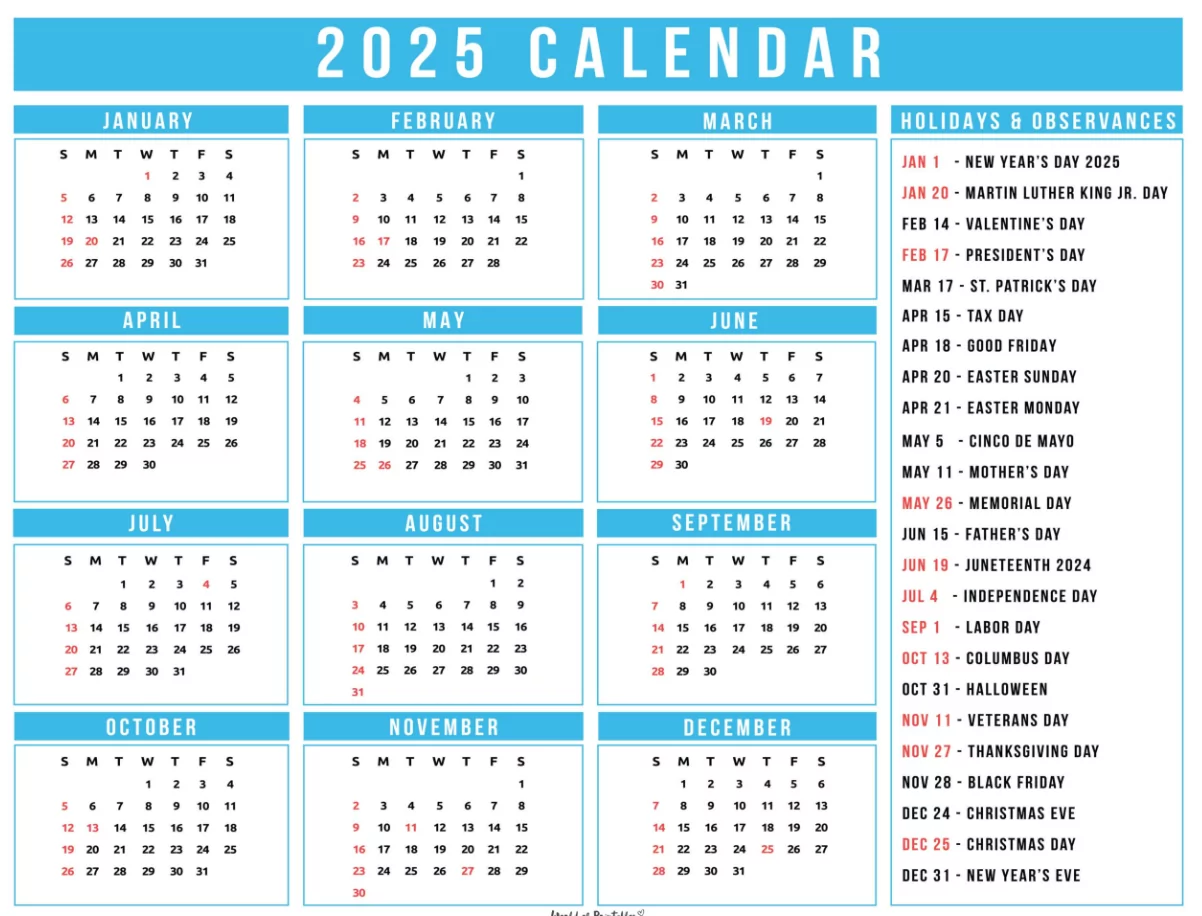
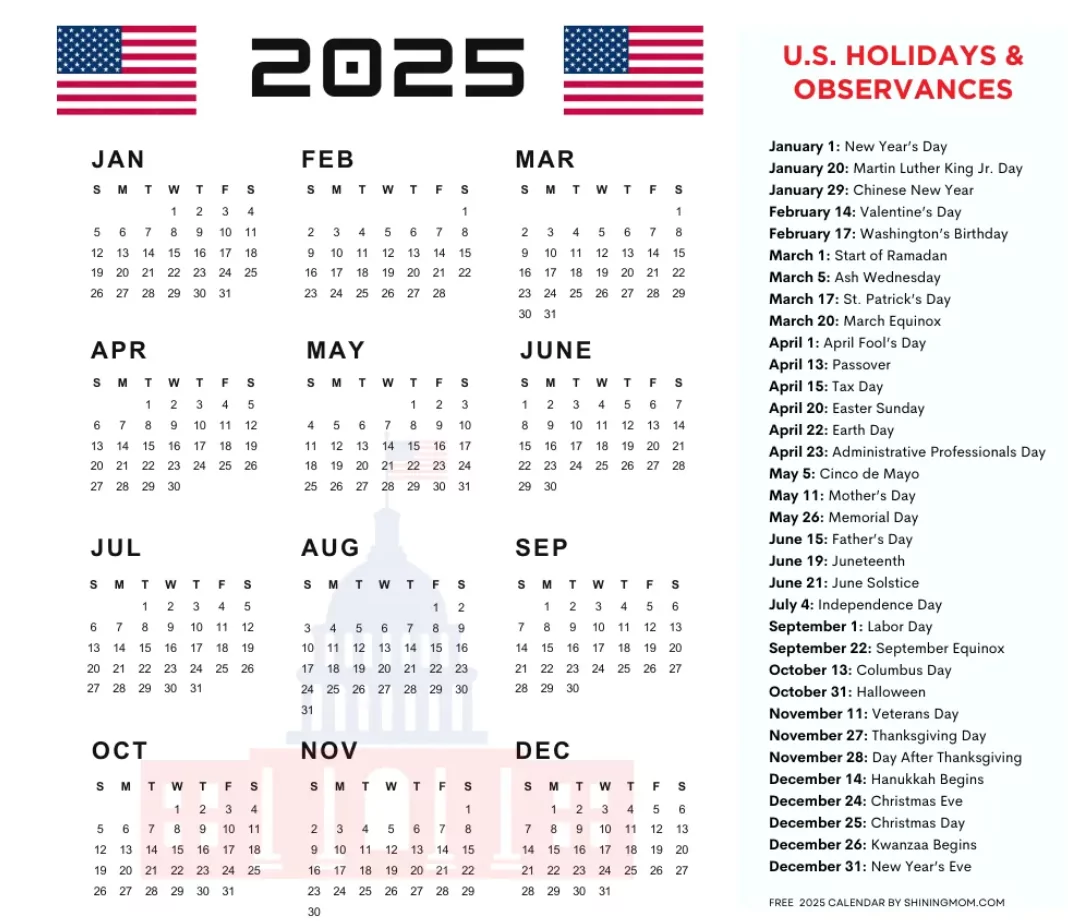
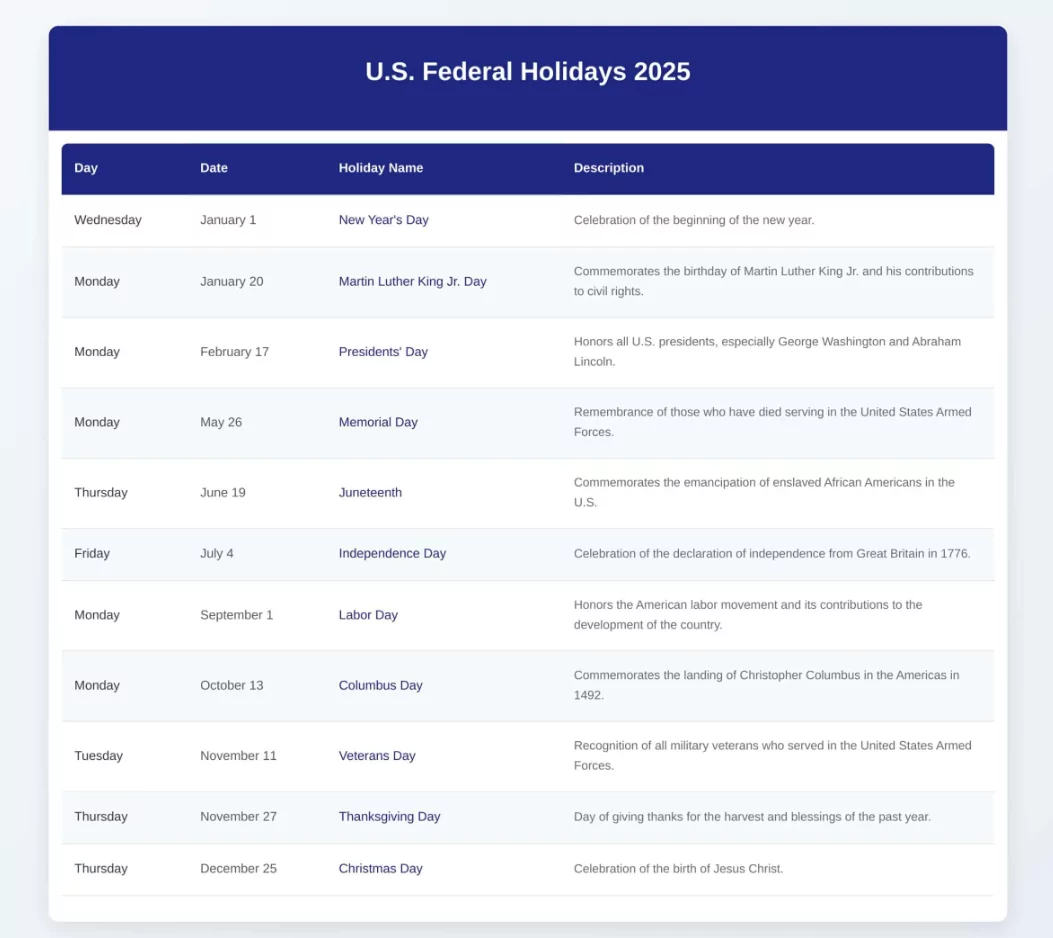
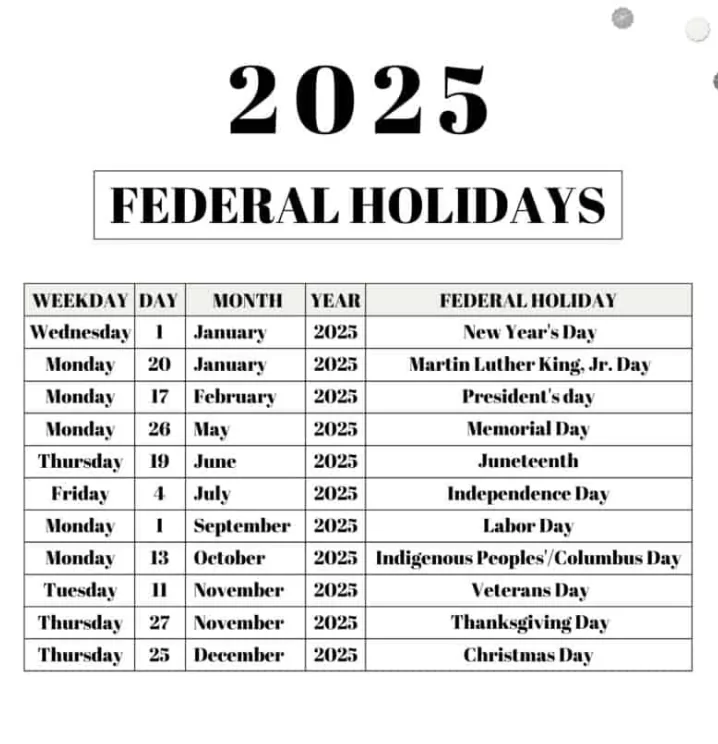
2025 Federal Holidays (Chronological Order):
- January 1 – New Year’s Day
- January 20 – Birthday of Martin Luther King, Jr.
- February 17 – Washington’s Birthday (Presidents’ Day)
- May 26 – Memorial Day
- June 19 – Juneteenth National Independence Day
- July 4 – Independence Day
- September 1 – Labor Day
- October 13 – Columbus Day
- November 11 – Veterans Day
- November 27 – Thanksgiving Day
- December 25 – Christmas Day
Detailed 2025 Federal Holiday Descriptions
1. New Year’s Day – January 1, 2025 (Wednesday)
Historical Background
New Year’s Day celebrates the beginning of the calendar year and represents renewal, fresh starts, and new beginnings. The January 1 date follows the Gregorian calendar adopted by Western societies. The holiday has ancient roots—Romans celebrated Januarius (named for Janus, the god of beginnings and endings) around this date thousands of years ago.
Cultural Significance
New Year’s Day symbolizes collective renewal. Many cultures mark this date with resolutions, goal-setting, and reflection on the past year. In American tradition, celebrations often include parties, fireworks, parades (particularly the Tournament of Roses Parade in Pasadena, California), and watching New Year’s football games. The holiday bridges diverse communities—nearly universal across cultures and religions, making it one of the most widely recognized holidays globally.
Business Impact
Federal offices, banks, and most businesses close. Stock markets remain closed. Most retail, entertainment, and service businesses maintain regular or modified hours. Many people spend time with family, travel, or participate in New Year’s celebrations. Productivity typically remains low on January 2 as people recover from celebrations.
2025 Details
New Year’s Day falls on Wednesday in 2025, creating a standard mid-week closure with no extended weekend.
2. Birthday of Martin Luther King, Jr. – January 20, 2025 (Third Monday in January)
Historical Background
This holiday honors Dr. Martin Luther King, Jr., the preeminent leader of the American Civil Rights Movement. Born January 15, 1929, Dr. King dedicated his life to fighting racial discrimination and advocating for racial equality through nonviolent resistance and civil disobedience. His “I Have a Dream” speech during the 1963 March on Washington remains one of history’s most powerful speeches. Tragically assassinated April 4, 1968, Dr. King’s legacy continues shaping American society and ongoing civil rights work.
The holiday was officially established in 1983, taking effect in 1986. Initially, some states resisted the holiday or combined it with celebrations of Robert E. Lee’s birthday—a controversial practice that gradually changed as national consensus embraced the holiday’s significance.
Cultural Significance
Beyond honoring Dr. King personally, this holiday celebrates the Civil Rights Movement’s achievements and recommits American society to principles of equality, justice, and nonviolence. Communities nationwide hold commemorative events, educational programs, marches, and celebrations recognizing civil rights progress and remaining work toward equity. The holiday represents national commitment to racial justice and equal opportunity.
Business Impact
Federal offices and most businesses close. Stock markets remain closed. Schools typically close, with many organizing educational programs about civil rights history. Some businesses hold community service projects on this day. Many organizations use the holiday for reflection on workplace diversity, equity, and inclusion initiatives.
2025 Details
Observed January 20, 2025 (third Monday in January). Falls on a Monday, providing standard day-off without extended weekend.
3. Washington’s Birthday (Presidents’ Day) – February 17, 2025 (Third Monday in February)
Historical Background
Officially named “Washington’s Birthday,” this holiday honors George Washington (born February 22, 1732), the first President of the United States and “Father of His Country.” Washington led American Revolutionary War forces to victory against British rule and presided over the Constitutional Convention establishing America’s government framework. Revered as foundational to American independence and democracy, Washington’s leadership during the nation’s formative years earned him enduring national respect.
The holiday was first observed in 1879, making it one of America’s oldest federal holidays. Though officially celebrating Washington, popular culture and business commonly call it “Presidents’ Day,” reflecting broader celebration of presidential legacy.
Cultural Significance
This holiday celebrates American presidential history and democratic leadership. While most commonly associated with Washington, many Americans use it to honor all presidents. The holiday provides opportunity for reflection on presidential legacies, American democracy, and national leadership. Some communities organize historical reenactments, educational programs, or patriotic celebrations.
Business Impact
Federal offices and most businesses close. Stock markets remain closed. Schools typically close. Retail businesses often use the holiday for sales promotions (Presidents’ Day sales becoming significant retail event). Many families use the three-day weekend for travel or recreation.
2025 Details
Observed February 17, 2025 (third Monday in February). Falls on a Monday, creating a three-day weekend (Friday-Sunday off would be regular weekend, Monday is holiday).
4. Memorial Day – May 26, 2025 (Last Monday in May)
Historical Background
Memorial Day honors American military personnel who died in service to their country. Originally called “Decoration Day,” the holiday emerged after the Civil War as communities decorated graves of fallen soldiers. The practice gradually evolved into the formal federal holiday established in 1888. Memorial Day specifically honors those who died in military service—distinct from Veterans Day, which honors all military veterans.
The holiday holds deep meaning for military families and communities affected by combat losses. It represents national gratitude and remembrance for those making the ultimate sacrifice.
Cultural Significance
Memorial Day is profoundly somber holiday emphasizing respect, sacrifice, and national remembrance. Communities nationwide hold parades, military ceremonies, and commemorative events. Cemeteries and memorials host ceremonies honoring the fallen. Citizens traditionally observe moments of silence at 3 PM local time. The holiday encourages reflection on war’s human cost and appreciation for military service.
Culturally, Memorial Day marks informal beginning of summer season in American tradition—despite its serious significance, many families use the long weekend for outdoor recreation and family gatherings.
Business Impact
Federal offices, banks, and most businesses close. Stock markets remain closed. Some service industries (restaurants, entertainment) maintain operations but may close or honor veterans with special programming. The extended weekend (Saturday through Monday) often triggers travel and recreation activity.
2025 Details
Observed May 26, 2025 (last Monday in May). Creates three-day weekend, extending into Memorial Day weekend beginning Friday, May 23.
5. Juneteenth National Independence Day – June 19, 2025 (Thursday)
Historical Background
Juneteenth commemorates June 19, 1865, when enslaved African Americans in Galveston, Texas learned of their freedom—more than two years after the Emancipation Proclamation. Union General Gordon Granger issued Order No. 3 declaring enslaved people freed, finally enforcing emancipation in the last Confederate state. This date became known as “Juneteenth” (June 19th + Nineteenth), celebrated by African Americans as independence day.
Long celebrated within African American communities, Juneteenth became a federal holiday in 2021, making it the newest federal observance. The designation recognizes the historical significance of African American freedom and celebrates their contributions to American society.
Cultural Significance
Juneteenth represents African American liberation and independence. Celebrations include family gatherings, educational programs, cultural performances, and historical commemoration. The holiday affirms Black freedom, celebrates African American culture and achievements, and acknowledges ongoing work toward racial equality. Juneteenth celebrations often feature traditional African American food, music, and cultural expressions.
As the newest federal holiday, Juneteenth reflects evolving national recognition of African American history’s central importance to American identity and values.
Business Impact
As a relatively new federal holiday, Juneteenth observance varies. Federal offices and many businesses close, though business adoption continues increasing. Stock markets remain closed. Many organizations use Juneteenth for educational programming and diversity initiatives. Some communities organize large public celebrations.
2025 Details
Observed June 19, 2025 (Thursday). Falls mid-week with no automatic extended weekend, though many businesses may offer adjacent Friday closure.
6. Independence Day – July 4, 2025 (Friday)
Historical Background
Independence Day celebrates American independence from British rule. July 4, 1776, marks the adoption of the Declaration of Independence by the Continental Congress in Philadelphia, formally announcing the thirteen colonies’ separation from Great Britain and establishing principles of individual liberty and democratic governance. The Declaration—drafted primarily by Thomas Jefferson—articulates revolutionary ideals that “all men are created equal” with inalienable rights including “life, liberty, and the pursuit of happiness.”
Though the Revolutionary War continued until 1783, July 4 marks the symbolic declaration of independence and birth of the United States as sovereign nation.
Cultural Significance
Independence Day is America’s founding celebration, representing national pride, patriotism, and commitment to democratic principles. It’s celebrated nationwide with fireworks (the first fireworks occurred in Philadelphia on July 4, 1777), parades, patriotic speeches, flag displays, and community gatherings. Families traditionally gather for picnics and barbecues. Patriotic music, especially “The Star-Spangled Banner,” resonates throughout celebrations.
The holiday represents American identity and values—freedom, democracy, equality, and self-governance. Fourth of July fireworks displays have become iconic American tradition, with cities nationwide hosting elaborate shows.
Business Impact
Federal offices, banks, and most businesses close. Stock markets remain closed. Many restaurants, entertainment venues, and retail businesses maintain operations due to holiday recreation demand. Extended weekend (Friday through Sunday) drives travel and vacation activity. Fireworks sales and patriotic merchandise become significant commercial activity.
2025 Details
Observed July 4, 2025 (Friday). Creates three-day weekend (Friday through Sunday), with many workers enjoying extended time off.
7. Labor Day – September 1, 2025 (First Monday in September)
Historical Background
Labor Day celebrates American workers and labor movements. The holiday emerged in the late 19th century during intense labor struggles—workers fought for reasonable hours, safe conditions, fair wages, and union rights. Major labor strikes and demonstrations occurred throughout the 1880s-1890s. President Grover Cleveland signed legislation establishing Labor Day as federal holiday in 1894, partly as conciliation after violent labor conflicts.
Labor Day honors workers’ contributions to American prosperity and recognizes ongoing labor rights advocacy. The holiday reflects national commitment to worker dignity and fair treatment.
Cultural Significance
Labor Day celebrates work, workers, and labor movements’ achievements. Communities often hold parades honoring workers, particularly union members. Some organizations host educational programs about labor history. The holiday provides occasion for reflecting on workplace conditions, worker rights, and ongoing labor advocacy.
Culturally, Labor Day marks the informal end of summer season—schools reopen, summer programs conclude, and fall schedules begin. Many families use the long weekend for final summer travel or recreation.
Business Impact
Federal offices and most businesses close. Stock markets remain closed. Schools typically close before reopening for new school year. Retail businesses often use Labor Day for sales promotions. The weekend (Friday through Monday) drives consumer activity and travel. Many businesses schedule reduced labor on this day—a symbolic acknowledgment contradicting the original purpose of celebrating workers.
2025 Details
Observed September 1, 2025 (first Monday in September). Creates three-day weekend plus long weekend if adjacent Friday is off.
8. Columbus Day – October 13, 2025 (Second Monday in October)
Historical Background
Columbus Day commemorates Christopher Columbus’s 1492 voyage across the Atlantic Ocean, reaching the Americas and initiating European exploration and colonization of the Western Hemisphere. Columbus, Italian-born explorer sailing under Spanish flag, has long been celebrated as the discoverer of America—a characterization now recognized as historically inaccurate and culturally problematic.
The holiday was first celebrated in 1792 and became federal holiday in 1968. However, historical scholarship increasingly recognizes Columbus’s brutality toward indigenous peoples and questions the “discovery” framing of colonization that displaced and devastated Native American populations.
Cultural Significance and Controversy
Columbus Day remains traditionally celebrated holiday, though its significance has become increasingly contested. Many Italian Americans view it as celebrating Italian heritage and achievement. However, Native American communities and indigenous advocates view the holiday as commemorating colonization, slavery, and genocide against Native peoples.
Recognizing this controversy, many cities and organizations have replaced Columbus Day with “Indigenous Peoples’ Day,” honoring Native American heritage and acknowledging historical injustices. Some states and localities officially observe Indigenous Peoples’ Day instead of or alongside Columbus Day.
Business Impact
Federal offices close; many private businesses remain open (Columbus Day has less universal closure than other major holidays). Stock markets remain open. Schools may be closed or open depending on district policy. The holiday’s declining significance in business and education reflects growing cultural shift toward recognizing indigenous perspectives.
2025 Details
Observed October 13, 2025 (second Monday in October). Falls mid-week; many businesses remain open despite federal office closures.
9. Veterans Day – November 11, 2025 (Tuesday)
Historical Background
Veterans Day honors military veterans who served in the United States Armed Forces, whether in combat or peacetime. The holiday originates from Armistice Day, marking November 11, 1918—the date World War I hostilities ceased. After World War II, the holiday was renamed “Veterans Day” to honor all military veterans, expanding recognition beyond WWI veterans to all who served.
Veterans Day represents national gratitude for military service and sacrifice. It honors those who survived service as well as those who died, distinguishing it from Memorial Day which specifically honors fallen service members.
Cultural Significance
Veterans Day is significant military observance. Throughout the day, ceremonies, parades, and commemorations honor veterans. Many Americans wear red poppies (tradition originating from WWI poetry) or display flags. Moment of silence often occurs at 11 AM, marking the 11th hour of the 11th day of the 11th month when WWI armistice took effect.
The holiday provides opportunity for civilians to express appreciation to veterans, thank them for service, and recognize sacrifice. Many businesses offer military discounts or free meals to veterans on this day.
Business Impact
Federal offices close; many private businesses remain open. Stock markets remain open (partial closure). Schools typically remain open. Veterans often receive discounts or free services from businesses on this day. Many organizations hold brief ceremonies or moments of silence honoring veterans.
2025 Details
Observed November 11, 2025 (Tuesday). Falls mid-week; no automatic extended weekend, though some businesses may close adjacent Monday or Friday.
10. Thanksgiving Day – November 27, 2025 (Fourth Thursday in November)
Historical Background
Thanksgiving celebrates gratitude and abundance. The modern holiday traditionally traces to 1621 gathering between Pilgrims (English settlers) and Wampanoag people sharing harvest feast. However, historical accuracy complicates this narrative—the encounter preceded widespread colonization violence and displacement of indigenous peoples, making simple celebration ethically problematic.
Thanksgiving became annual tradition and was proclaimed national holiday by President Abraham Lincoln in 1863 during the Civil War. Lincoln designated the last Thursday in November for Thanksgiving observance, later changed to the fourth Thursday. The holiday has evolved into primarily secular celebration emphasizing gratitude, family, and abundance.
Cultural Significance
Thanksgiving is deeply embedded in American culture as family-centered holiday emphasizing gratitude and togetherness. Traditionally, families gather for large meals featuring turkey, stuffing, cranberry sauce, and pie. The holiday provides opportunity for reflecting on blessings and expressing appreciation.
However, many indigenous peoples and historically conscious Americans view Thanksgiving critically, recognizing it as commemorating colonization while glossing over indigenous displacement and genocide. Some communities now celebrate “Day of Mourning” or “Unthanksgiving” acknowledging indigenous perspectives on colonization.
Despite controversies, Thanksgiving remains widely celebrated family holiday drawing Americans together across regional, cultural, and religious lines.
Business Impact
Thanksgiving and the day after (Black Friday) represent major holiday period. Most federal offices and businesses close on Thanksgiving Day itself. Many businesses close Friday after Thanksgiving as well, creating extended four-day weekend. Stock markets close Thursday and Friday. Retail businesses intentionally remain open Friday, treating Black Friday as major shopping event launching holiday shopping season.
Thanksgiving drives significant travel activity—Thanksgiving week represents one of year’s busiest travel periods with millions traveling to spend holiday with family.
2025 Details
Observed November 27, 2025 (fourth Thursday in November). Creates extended holiday period with many businesses closed Thursday and Friday (November 27-28), providing four-day weekend including regular Saturday-Sunday.
11. Christmas Day – December 25, 2025 (Thursday)
Historical Background
Christmas celebrates the birth of Jesus Christ, central figure in Christianity. Historically, Christians believed Jesus was born December 25, though historical scholars recognize the actual birthdate remains uncertain. December 25 selection partly reflects Christian attempts to replace pagan winter solstice celebrations, establishing Christian alternative to solstice observances.
Christmas evolved from primarily religious observance into broader cultural celebration incorporating secular traditions. Modern Christmas combines religious commemoration with secular gift-giving, family gatherings, decorative traditions, and commercial celebration.
Cultural Significance
Christmas is the most widely celebrated holiday in the United States, observed across religious and cultural lines. While Christians celebrate Jesus’s birth, many secular Americans celebrate Christmas as family and cultural holiday without religious significance. Christmas traditions include decorating with lights and ornaments, Christmas trees, gift-giving, caroling, holiday meals, and family gatherings.
Christmas represents season of giving, compassion, and family connection. The holiday emphasizes universal themes of generosity, hope, and peace—enabling participation across religious traditions. Commercial aspects have become dominant—Christmas represents major retail season with extensive consumer spending and holiday promotions.
Business Impact
Federal offices, banks, and most businesses close on Christmas Day. Stock markets close. Retail businesses often close Christmas Day but remain open other holiday season dates for shopping. The holiday period extends across multiple weeks with many businesses reducing hours or offering holiday specials. Post-Christmas period (December 26) remains busy for retail returns and post-holiday sales.
2025 Details
Observed December 25, 2025 (Thursday). Creates extended holiday period with many businesses closed Thursday, with some closing Friday (December 26) as well, providing four-day weekend including regular Saturday-Sunday.
Additional Important Dates (Non-Federal Holidays)
Black Friday – November 28, 2025 (Day After Thanksgiving)
While not an official federal holiday, Black Friday (day after Thanksgiving) functions as significant commercial holiday. Retail businesses traditionally offer major discounts and promotions launching holiday shopping season. The name allegedly originated from retailers moving from “red” (losses) to “black” (profits) after holiday sales surge.
Black Friday has evolved into major shopping event with consumers camping outside stores for opening-day deals. In recent years, Thanksgiving evening shopping and “Cyber Monday” (Monday after Thanksgiving focusing on online sales) have expanded the extended shopping weekend.
New Year’s Eve – December 31, 2025 (Wednesday)
While not a federal holiday, New Year’s Eve is widely celebrated. This day marks the end of calendar year and anticipation of new year. Celebrations include parties, countdowns to midnight, fireworks, and festive gatherings. Many employers grant employees partial day off or early dismissal to begin celebrations.
2025 Holiday Planning Insights
Extended Weekends
2025 features several long weekends created by holidays falling adjacent to weekends:
- Presidents’ Day Weekend (February 14-17): Friday-Monday four-day weekend
- Memorial Day Weekend (May 23-26): Friday-Monday four-day weekend
- Independence Day Weekend (July 4-6): Friday-Sunday (adjacent Monday July 7 typically off for many)
- Labor Day Weekend (August 29-September 1): Friday-Monday four-day weekend
- Thanksgiving Weekend (November 27-December 1): Thursday-Monday with extended period
- Christmas/New Year Period (December 25, 2025-January 1, 2026): Extended closure period
Mid-Week Holidays
Some 2025 holidays fall mid-week without adjacent extended weekend:
- New Year’s Day (Wednesday)
- MLK Day (Monday)
- Juneteenth (Thursday)
- Columbus Day (Monday)
- Veterans Day (Tuesday)
Business Planning Considerations
With ten federal holidays plus Black Friday closures and holiday season extensions, businesses should plan strategically:
- Project deadlines should avoid holiday periods
- Staffing plans must account for reduced availability during holidays
- Supply chain coordination should recognize vendor closures
- Customer communication should notify of holiday impacts
- Inventory should be managed to accommodate holiday fluctuations
Holiday Observance Variations
Religious Observance Accommodations
While federal holidays are primarily secular or civic in nature, many workplaces accommodate employees’ religious observances. Employees may request time off for religious holidays not on federal calendar:
- Christian: Easter, Good Friday, Ash Wednesday
- Jewish: Passover, Yom Kippur, Hanukkah
- Islamic: Eid al-Fitr, Eid al-Adha, Ramadan
- Hindu: Diwali, Holi
- Buddhist: Vesak
- Other traditions: Varies by faith
Inclusive employers often develop policies enabling employees to observe significant religious holidays beyond federal calendar.
State and Local Holiday Variations
Some states observe additional holidays:
- Some Southern states observe Confederate-related holidays (increasingly controversial)
- Some states observe state-specific historical figures’ birthdays
- Many cities observe Indigenous Peoples’ Day instead of Columbus Day
- State employee holidays may differ from federal schedule
Conclusion: Understanding 2025 Federal Holidays in Context
The 2025 federal holiday schedule represents more than organizational calendar—it reflects American history, values, and cultural evolution. Each holiday carries historical significance, cultural meaning, and ongoing relevance to national identity.
Understanding federal holidays deeply—beyond mere dates and closures—enables appreciation for the traditions, figures, and movements each holiday honors. From New Year’s renewal through Christmas abundance, from civil rights to veterans’ sacrifice, federal holidays mark the calendar with America’s complex, diverse, and evolving story.
For businesses, educators, and individuals, comprehensive understanding of 2025 federal holidays enables effective planning while deepening appreciation for the cultural and historical foundations each observance represents. As you engage with 2025’s holidays, take time to reflect on their significance beyond work closures—exploring the histories, honoring the people, and recognizing the values each holiday exemplifies.